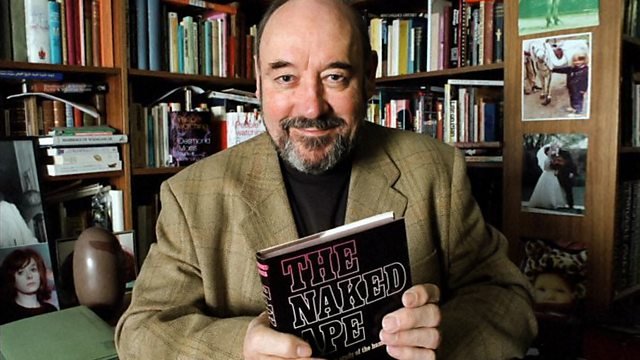
In 1969, zoologist and author Desmond Morris published The Human Zoo. The book was the second in his Naked Ape trilogy and explores how humans have adapted (or perhaps maladapted) to life as city dwellers in highly complex, modern societies.
Like many 20th century authors, Morris was concerned about overpopulation. He argued that if our numbers continued increasing, ‘Something will eventually arrive to reduce our population level, no matter what we do.’ Rather than waiting for a black swan event that could threaten the survival of our entire species, Morris favored deliberate efforts to stem population growth in a controlled manner. However, he stated that coercive measures designed to bring about a decline in births ‘is unacceptable to our fundamentally co-operative nature.’ The assumption held up, with the exception of China and its one child policy.
The preferred alternative then, in Morris’s view, was to advocate voluntary methods of population reduction:
We might popularize suicide (‘Why wait for disease? – Die now, painlessly!’), or perhaps create a sophisticated new celibacy cult (‘purity for kicks’). Advertising agencies throughout the world might be employed to pour out persuasive propaganda extolling the virtues of instant dying.
Fifty years later, we see that Morris’s speculations have been remarkably prescient.
Assisted Dying

In 2016, the Canadian government legalized “medically assistance in dying” (MAID). Originally, MAID eligibility was restricted to those with a ‘serious illness, disease or disability’ in an ‘advanced state of decline that cannot be reversed’ who are experiencing ‘unbearable physical or mental suffering’.
Several other nations have their own laws permitting versions of assisted dying including the Netherlands, Switzerland, Belgium, and parts of the United States. There are also ongoing campaigns to legalize assisted dying in the United Kingdom.
Returning to Canada, MAID’s official guidelines now state that candidates ‘do not need to have a fatal or terminal condition to be eligible’, and from March 17 onwards, people with only a diagnosed ‘mental illness’ will also be eligible. Clearly the net is widening. Writing in The Atlantic, David Brooks describes several cases of assisted dying that appear to go beyond its original purpose.
Given the ease with which one can obtain a psychiatric diagnosis (not to mention the unreliability of such diagnoses), Canada’s latest update to MAID is particularly concerning. Allowing people experiencing what often amounts to a temporary state of malaise to make the irreversible decision to die would appear fraught with unforeseen negative consequences.
Of course, assisted dying is not being overtly promoted as a means of population reduction, as outlined by Morris. Rather, its proponents typically appeal to principles of individual sovereignty and the safeguarding of dignity. This is important to clarify since the world population is not growing exponentially in the way Morris foresaw. On the contrary, we are experiencing dramatic declines in birth rates across the globe.
China, Korea and Japan’s births are all well below replacement levels, leaving fewer and fewer young people to care for a larger and larger proportion of elderly citizens. The West would likely be in a similar position if not for immigration, which has its own trade-offs that some argue outweigh the benefits of maintaining a stable population.
SINKs & DINKs
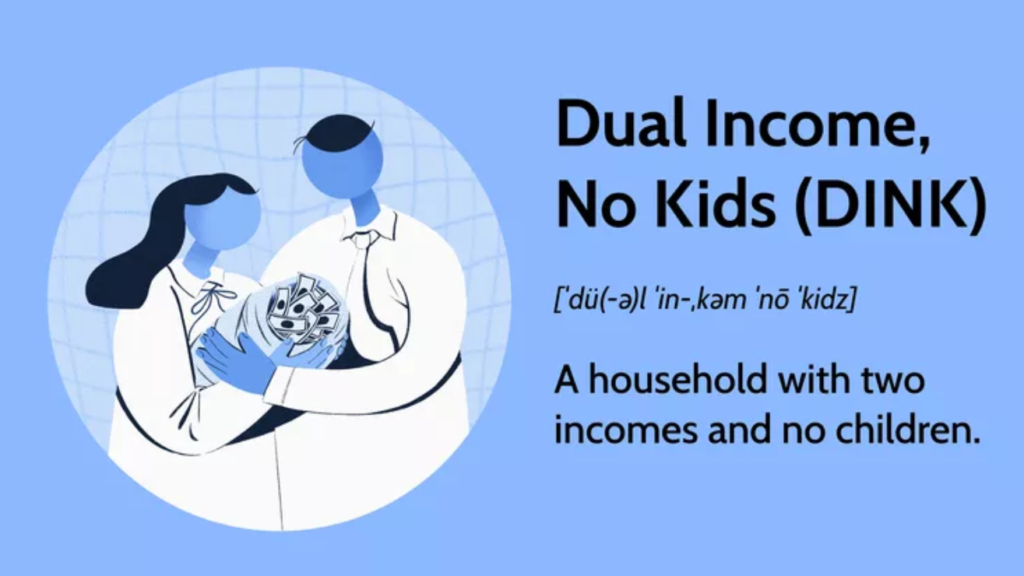
SINK/DINK stands for “single/dual income, no kids”. In other words, it refers to people in relationships who choose not to have kids (DINK) and those who refuse both relationships and kids (SINK). This lifestyle has being growing in popularity, as evidenced by a plethora of videos promoting the topic online.
Is this the ‘sophisticated new celibacy cult’ Morris was referring to? It could certainly be viewed that way. Several SINKs appear proud of their decision not to procreate, whilst also seemingly disdainful of the very idea of children. The priority for them appears to be a life of hedonism via travel and consumption.
Unsurprisingly, prominent religious figures have pushed back against the trend. It is not only the religious that see problems with the DINK lifestyle, however. Elon Musk, entrepreneur and father of nine children, has repeatedly sounded the alarm with regards to population decline and has urged people to have more children.
Governmental efforts to increase birth rates have been largely ineffective. After China abandoned its one child policy in 2016 and began allowing couples to have two children, a fresh baby boom was anticipated. That wasn’t the case, however. The government then increased the limit to three children per family. Again, no baby boom. But not only has the removal of restrictions failed to increase fecundity, China’s birth rate has effectively collapsed.
The Wall Street Journal recently noted that China’s birth rate has now eclipsed the depths it saw during its 20th century famines. The government has tried to inspire would-be parents with financial incentives but they have not made a dent. Other countries such as Hungary have made similar attempts with similarly unflattering outcomes.
As mentioned above, the attempted solution preferred by Western governments has been unfettered immigration. “If our citizens won’t breed, we’ll import new ones” appears to be the ostensible line of reasoning.
Although the West’s population numbers remain more stable than that of the Orient, inviting millions of foreigners with disparate cultures, values and languages into a single nation is not without its downsides. Sweden, for example, has experienced a dramatic increase in rape over the last two decades, coinciding with a large influx of immigrants. This has earned the country the highly unflattering title, “rape capital of Europe”. The sexual abuse of minors by foreign-born men in the UK has also been an ongoing crisis that was ignored for years due to fears that merely noticing such crimes were occurring would lead to accusations of racism. Finally, the United States is experiencing unprecedented levels of illegal crossings via its southern border, with no solution in sight. Fed up with the status quo and unwilling to house them, states like Texas have spent millions of dollars relocating illegal immigrants to other parts of the country such as New York.
Priorities

In every industrialized nation in which birth control is accessible and women have the freedom to determine their academic and professional lives, birth rates decline. No nation knows how to permit the former without simultaneously facilitating the latter.
Critics of feminism like to point out how the Western media has demonized men and sold women a bill of goods by encouraging them to postpone marriage and children in favor of their careers. No doubt, there is evidence to support such a narrative. But it cannot be the primary cause of the decline in births. We know this because Asia is experiencing the same phenomenon without decades’ worth of media undermining men and glamourizing the Sex and the City lifestyle. It is true that feminism has spread rapidly in countries like China but it is certainly not the result of top-down efforts to move the public in that direction. Quite the opposite is the case. The Chinese government has been working to promote family values whilst suppressing feminist voices, albeit to no avail.
To explain the decline of the family unit, some men’s rights advocates cite what they view as a highly lopsided legal system that rewards women who choose to divorce. For many men, the solution has been to go Galt. ‘Men going their own way’ (MGTOW), a brand of SINKs swearing off marriage (or in some cases relationships altogether) are men effectively on strike. They advocate avoiding marriage and cohabitation with women, at least until marital laws change.
The Kafkaesque horrors depicted in films like Marriage Story are thankfully not universal. Asian countries like China do not enable the kind of lawfare many men experience in the US. Yet, their birthrates are nonetheless dropping. Therefore, we cannot blame Western legal systems for the decline either, despite their obvious flaws.
It comes down to this: When women are given the choice to pursue their own academic and career goals versus raise children, a significant proportion prioritize the former over the latter. Despite the fact that the average woman will spend twice as much of her life working (40+ years) as she will ovulating , women are choosing to develop careers first in the hopes that they may start families later. Unfortunately, many fail to accomplish this. There are numerous examples of women failing to find a suitable mate that meets their standards before their fertility window closes or for those attempting in-vitro fertilization, discovering they have no viable eggs remaining. Morgan-Stanley forecasts that by 2030, roughly half of American women (ages 25-44) will be single.
The Future
Morris may have been right about the “solutions” we would come to adopt but he was wrong about the problem that needed solving. Ironically, the solutions he outlined are exacerbating our present issue, namely that without enough working-age people, there will be no future. Some say the machines will pick up the slack. Others, the anti-natalists and environmentalists, welcome our demise; they appear to share Agent Smith’s view that humanity is a plague in need of a cure.
For those of us who do genuinely value humanity (and wish for it to have a prosperous future), learning how to inspire a love of life – a love of creating life – may just be the defining challenge of our time.
This article was originally authored in early 2024.